


.jpeg)
You must have noticed how outdoor spaces in premium hotels, resorts or even modern villas feel inviting and well-defined after sunset. The pathways are clearly visible, the trees look sculpted, the facades stand out, and the entire space feels both safe and visually balanced. This transformation happens because of well-planned landscape lighting.
At Jaquar, we see landscape lighting not just as outdoor illumination, but as a way to structure space, enhance visibility, and improve the experience of outdoor environments after dark. Well-planned outdoor lights can completely transform how a space looks and feels at night. The key lies in choosing the right lighting types, placements and technical specifications.
Why Landscape Lighting Matters in Modern Outdoor Design
While the primary purpose of landscape lighting is functional visibility, it plays multiple roles:
- Improves visibility and safety across pathways, steps and driveways
- Highlights architectural and natural features
- Creates depth and structure in outdoor spaces
- Enhances security by reducing dark zones
- Adds functional usability for evenings and night-time activities
From villas and resorts to corporate campuses and retail complexes, outdoor lighting today is expected to deliver both performance and visual balance.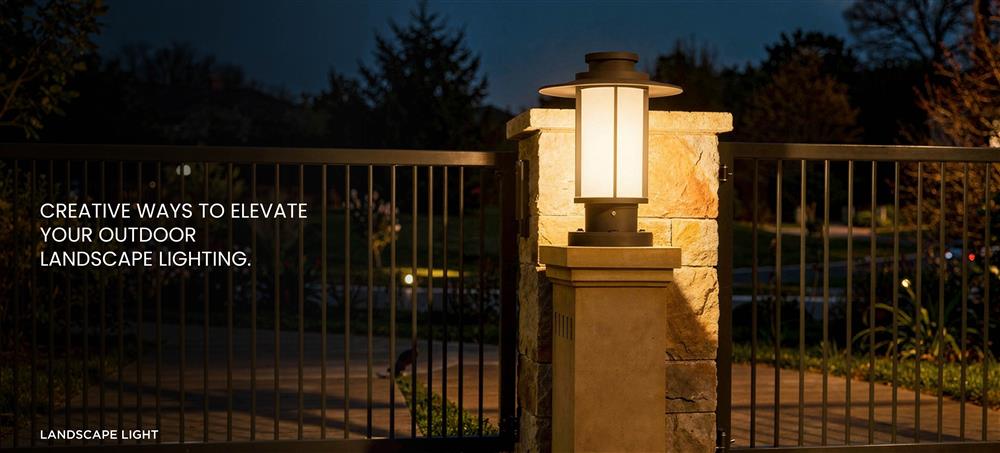
Key Types of Landscape Lighting and Where to Use Them
Here are the most commonly used landscape lighting types and how each one serves a specific functional and visual purpose in outdoor spaces.
Pathway and Walkway Lighting
Our path and bollard lights are used along walkways, garden paths and entrances to ensure safe movement and clear navigation. These fixtures are usually low-mounted and evenly spaced to provide continuous visibility without creating glare. For residential applications, typical wattage ranges from 3W to 10W, while commercial spaces may require higher output. These lights should ideally have an IP65 or higher rating to withstand rain, dust and temperature variations.
Uplighting for Trees and Structures
Uplights are installed at ground level and directed upward to highlight trees, columns, sculptures, or other architectural elements. This lighting technique adds depth and visual structure to outdoor spaces, especially in large gardens, resorts and hospitality landscapes. Most uplights operate between 5W and 20W, depending on the beam angle and the object's height. Narrow beam angles help control light spill and maintain visual focus.
Wall Wash and Facade Lighting
Wall-mounted outdoor lights and linear fixtures are used to wash light across large vertical surfaces such as building facades, compound walls and textured exteriors. This type of lighting enhances architectural visibility and is widely used in villas, hotels and commercial buildings. These fixtures provide both functional illumination and design emphasis, helping structures remain visible and defined after dark.
Accent Lighting for Landscape Features
Accent lighting highlights specific landscape elements, such as planters, water features, seating zones, or decorative structures. Spotlights and narrow-beam fixtures work best for this purpose, as they create controlled focal points without overpowering the surrounding space. This type of lighting adds visual layering and helps break large outdoor areas into well-defined zones.
Flood Lighting for Large Areas
We design our flood light fixtures to illuminate open spaces such as lawns, parking areas, sports zones and building perimeters. These fixtures provide wide beam angles and high lumen output, typically ranging from 20W to 100W or more, depending on coverage requirements. Flood lights are essential for functional visibility and security, especially in commercial, institutional and large residential properties.
In-Ground and Recessed Lighting
In-ground and recessed lights are embedded in pathways, decks, steps, or landscape edges to provide subtle, uniform illumination. These fixtures are used for modern outdoor designs where visible hardware is minimised. They are ideal for highlighting circulation paths and level changes and typically require higher ingress protection ratings due to constant exposure to moisture and dust.
5 Creative Ways to Use Landscape Lighting
Here are practical, yet creative landscape lighting ideas to enhance visibility, improve safety, and create well-defined outdoor spaces after dark.
Define Pathways with Layered Lighting
Instead of using only one type of fixture, combine bollard lights with in-ground lights to create layered illumination. This improves visibility while adding visual depth. Spacing lights every 1.5 to 2 metres ensures uniform lighting without dark gaps.
Highlight Trees and Green Zones
Uplighting trees creates a strong vertical visual element and makes gardens look structured. Use narrow-beam garden lights/flood lights for tall trees, and wider beams (45° to 60°) for shrubs and plants.
Frame Architectural Features
Use wall-mounted outdoor lights to highlight building textures, columns or boundary walls. This works especially well for modern facades and hospitality projects where architecture is part of the visual identity.
Create Functional Zones in Open Spaces
Flood lights can be used to define functional areas such as seating zones, outdoor dining spaces or recreational areas. This helps organise large outdoor layouts without using physical barriers.
Integrate Lighting with Landscape Elements
Recessed lights installed into steps, decks, or planters offer subtle illumination without visible fixtures. This creates a clean and modern appearance while maintaining functional visibility.
Key Considerations When Using Landscape Lighting
When selecting outdoor lights, design alone is not enough. Technical performance is equally important.
IP Rating
Outdoor fixtures must withstand dust and moisture. An IP65 rating is suitable for most outdoor applications, while IP67 or higher is recommended for in-ground or water-exposed installations.
Lumen Output
Brightness should match the purpose. Path lights typically require 100-300 lumens, while flood lights may need 1,500-5,000 lumens or more for large areas.
Colour Temperature
Warm white (2700K-3000K) is ideal for residential gardens and hospitality spaces. Neutral white (4000K) works better for commercial landscapes and security lighting.
Beam Angle
Narrow beams (15°-30°) are used for accent lighting. Wide beams (60°-120°) are suitable for general illumination and open spaces.
Energy Efficiency
LED outdoor lights consume up to 70-80% less energy compared to traditional lighting and offer operational lifespans of 30,000 to 50,000 hours.
Material and Build Quality
Fixtures should be made from corrosion-resistant materials such as aluminium or stainless steel, especially in coastal or humid environments.
Glare Control
Avoid placing lights at eye level or using excessive brightness. Poor glare control reduces visual comfort and defeats the purpose of good lighting design.
Final Thoughts
Creative landscape lighting transforms outdoor spaces into functional, secure and visually engaging environments. Whether it is highlighting pathways, illuminating facades or using a flood light for wide-area coverage, the right lighting plan enhances both usability and design.
At Jaquar, we are committed to designing outdoor lights that deliver performance, durability, and environmental resilience. Our landscape lighting solutions are engineered for residential, hospitality, and commercial spaces, offering consistent output and long operational life.
Discover our collection to find the ideal fixtures that combine technical performance with modern design.
FAQs
Landscape lighting is used to illuminate outdoor areas such as gardens, pathways, facades and open spaces for safety, visibility and aesthetic enhancement.
Path lights, spotlights and uplights work best for gardens. They help highlight plants, trees and walkways without overpowering the space.
Warm white suits residential landscapes, while neutral white works well for commercial exteriors and security lighting.
High-quality LED outdoor lights can last between 30,000 and 50,000 hours, depending on usage and environmental conditions.
Pathway lights are typically spaced 1.5 to 3 metres apart for residential gardens. In commercial or public areas, spacing may be reduced to ensure consistent illumination and safety.
Yes, many modern outdoor lighting systems can be integrated with timers, motion sensors and smart controls, allowing automated operation, energy savings and remote management.
 Bath :